

























AI is rapidly changing the world around us. Some people use it in their everyday lives. While it has created many benefits, it has also raised concerns about jobs, school, and even human interaction. Students rely on AI in many daily activities, both in and out of school. Many students use AI to answer questions, help with assignments, organize schedules, and communicate through voice assistants and predictive text.
Sophomore Mya Murphy explained, “AI is helpful, but it can also be harmful. It can enhance your own ideas and give you a better way of saying it. The issue comes into play when students take what AI says and copy it exactly into their assignments.”
ADP Research stated, “AI can affect jobs in two ways. It can perform tasks that people typically do, such as answering calls and writing code, thereby displacing workers. Or it can augment work, helping people do their jobs faster and better.”
Although there are many positives, there are also many negatives. “60 Minutes Australia” claimed that chronically online people are gaining brain fog and starting to develop dissociation habits.
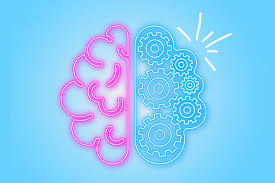
In my opinion, AI has taken away our opportunities to think and develop our own ideas. Most of us rely on AI for anything that we can’t think of off the tops of our heads. While it can be useful for some ideas, it is ruining the brains of teenagers and young adults still in school.
Freshman Maddie Penna commented, “I believe AI is really harmful to both the environment and the people using it. AI does not allow the user to think for themselves. Instead, they quickly ask a bot to think for them. This causes a shrinkage of the brain. It also harms the environment because the meta centers used to control AI use gallons of water to cool the machines. This process causes Earth’s water supply to deplete.”
The use of AI in schools and in the workplace has been normalized. Students are beginning to depend on AI to complete assignments instead of thinking and learning themselves. This can weaken a student’s creativity, critical thinking, and problem-solving skills. Although AI is a big issue for most teenagers and young adults, screen time is also something many students struggle with.
Alayna Dowling, a freshman, shared, “My screen time varies from 4-6 hours a day. I use TikTok mainly, then Snapchat and Instagram. These apps help me connect with more people my age, but I do recognize that this could be harmful.”
Most students have the issue of always wanting to be on social media or staring at a screen. They don’t realize it now, but this will start affecting the brains of young students and adults.
According to the AAP, high school students’ average screen time is 8 hours and 39 minutes per day. This kind of number can cause extreme issues throughout a student’s mental health as well as their health in general.
Social media, streaming apps, and navigation apps also use AI to influence what students watch and do every day. While AI makes life easier, relying on it too much will weaken creativity, independence, and critical thinking skills. There is a right way to use AI, and that is what students need to be taught.
Photo Credit: Google