



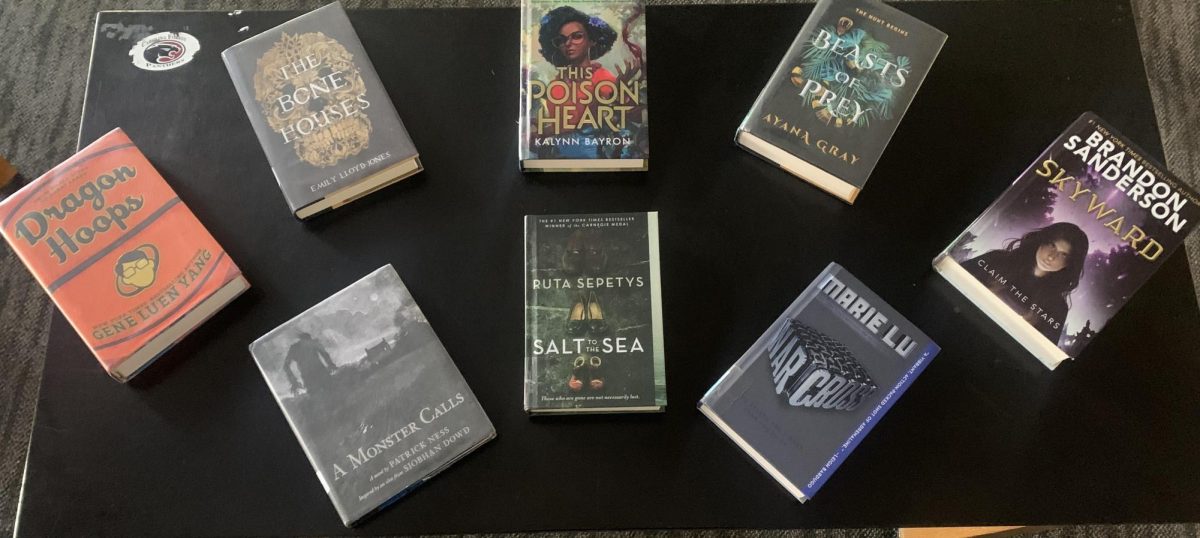







Tens of thousands of books have been banned within the United States alone, and many others challenged. Controversy has started over whether or not certain books should be restricted from certain states, areas, and/or regions.
Some people believe that specific topics or beliefs shouldn’t be highlighted within a book that is available to the general public, due to how it may influence readers. On the other hand, others think that it is important for people to have freedom of speech and thought. By taking away the public’s right to access specific information through bans and restrictions, the government is seen to be violating the first amendment.
Banned books not only limit everyone’s access to information, but they also limit the voice that writers have in society. Instead of being able to freely express their personal opinions and harsh realities, they are confined to telling specific storylines that cannot be seen as offensive. In our society today, this can be a hard guideline to follow, as you can barely say anything without offending at least one person, even if it’s not intentional.
It is important for the public to have access to deep, emotional books on all sorts of topics. Critical thinking, alongside empathy and an understanding of history, is created through reading. If we take out a book just because it goes against one’s political or religious beliefs, then the books available will reflect only one side of beliefs. Therefore, this is limiting the general public’s exposure to different perspectives and opinions.
According to the EveryLibrary Institute poll, 50% of people believe that there should never be a time in which a book should be banned. In the same poll 41% responded saying that sometimes a book should be banned depending on the context of the situation. The last 8% said that many books deserve to be banned due to inappropriate topics.
Christa Maxwell, an English teacher at Carolina Forest, shared her opinion on the topic of banned books.
“I believe that there is an appropriate place for restricting certain books that contain explicit content. Depending on a student’s age and developmental stage, some texts may be inappropriate or create unnecessary discomfort. Materials that include grooming-related language, in particular, should not be readily accessible to adolescents. At the same time, I support the availability of historically significant texts, as they allow students to learn from past mistakes and understand important contexts. However, works that introduce radical or mature themes should be thoughtfully monitored to protect students’ developmental needs, preserve childhood innocence, and ensure a safe and age-appropriate learning environment,” shared Maxwell.
Rather than banning books, restrictions should be placed for younger audiences, upon books that contain inappropriate content for specific age groups. At some point, all children reach the age in which they should no longer be restricted from certain content, so a permanent ban is not necessary. It is important that all people eventually mature to the point where they can read texts which contain significant and sensitive themes, so that they can learn and have an understanding of specific topics.
Some people, however, believe that no book should ever be banned or restricted.
Brooke Edwards, a sophomore, shared, “I feel that a book should never be banned. By banning books you are taking away information that is available to the public, some of which may be of importance.”
This stance is most popular among those who answered within the poll. People believe this as they feel every piece of information deserves to be shared with anyone and everyone. Even books that are technically banned are still used within schools, and read by younger audiences, for educational purposes. “To Kill a Mockingbird” is an example of one of those books. Maturity definitely plays a role in whether someone should or shouldn’t be allowed access to something, though a state or government band should not be needed.
Other popular books, often seen online and loved by many, happen to be banned. These include the following: “The Hunger Games” by Suzanne Collins, “Throne of Glass” by Sarah J. Mass, “Harry Potter and the Sorcerers Stone” by JK Rowling, “The Great Gatsby” by F. Scott Fitzgerald, and “The Summer I Turned Pretty” by Jenny Han. Many of these books have had multiple bans across different regions and school districts.
There are many different opinions upon banned books, and no matter how you view it, these restrictions can be both seen as good and bad. It is hard to pinpoint when exactly a book deserves to be banned from a certain region or school, as everyone is of a different maturity level. The best solution to the problem is to not ban books, but to have parents and people of an older age, set guidelines based upon their own children. The only thing these bans are doing is limiting the general public’s access to information.
Photo Credit: Lily Shiltz